 中文
中文CD200 Series Digital Pulse Servo Drive
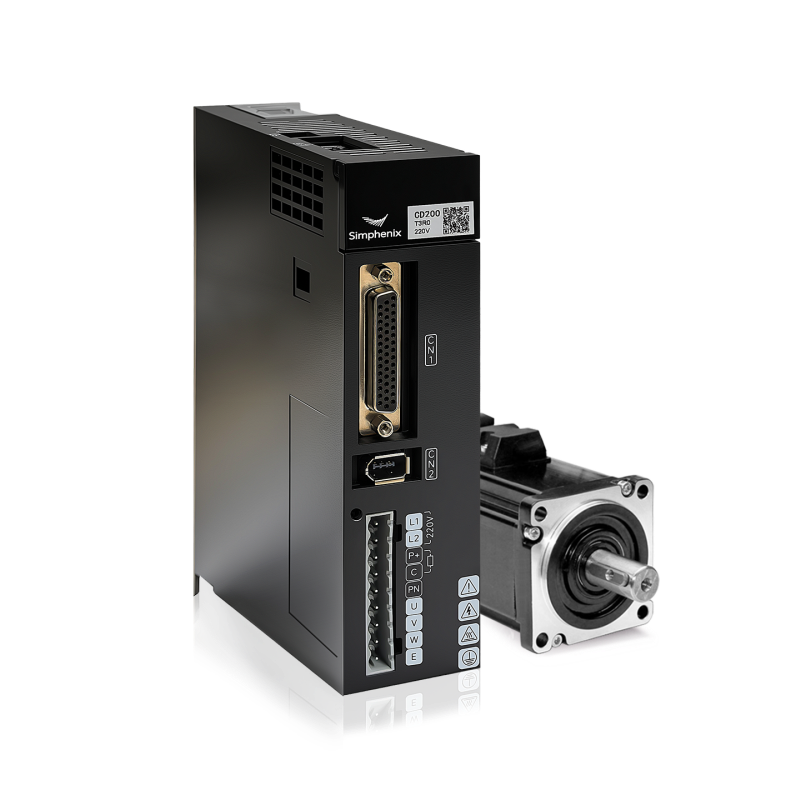
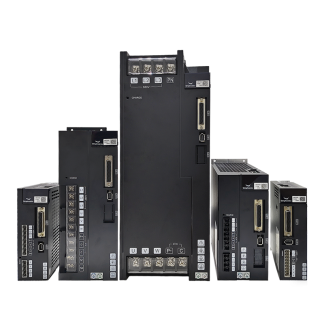
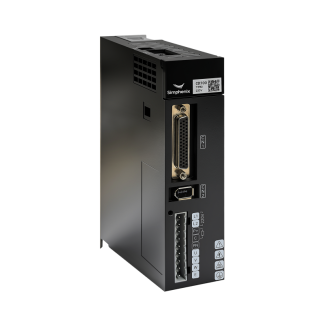
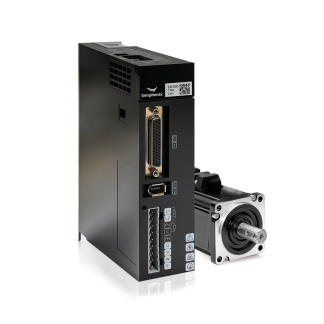
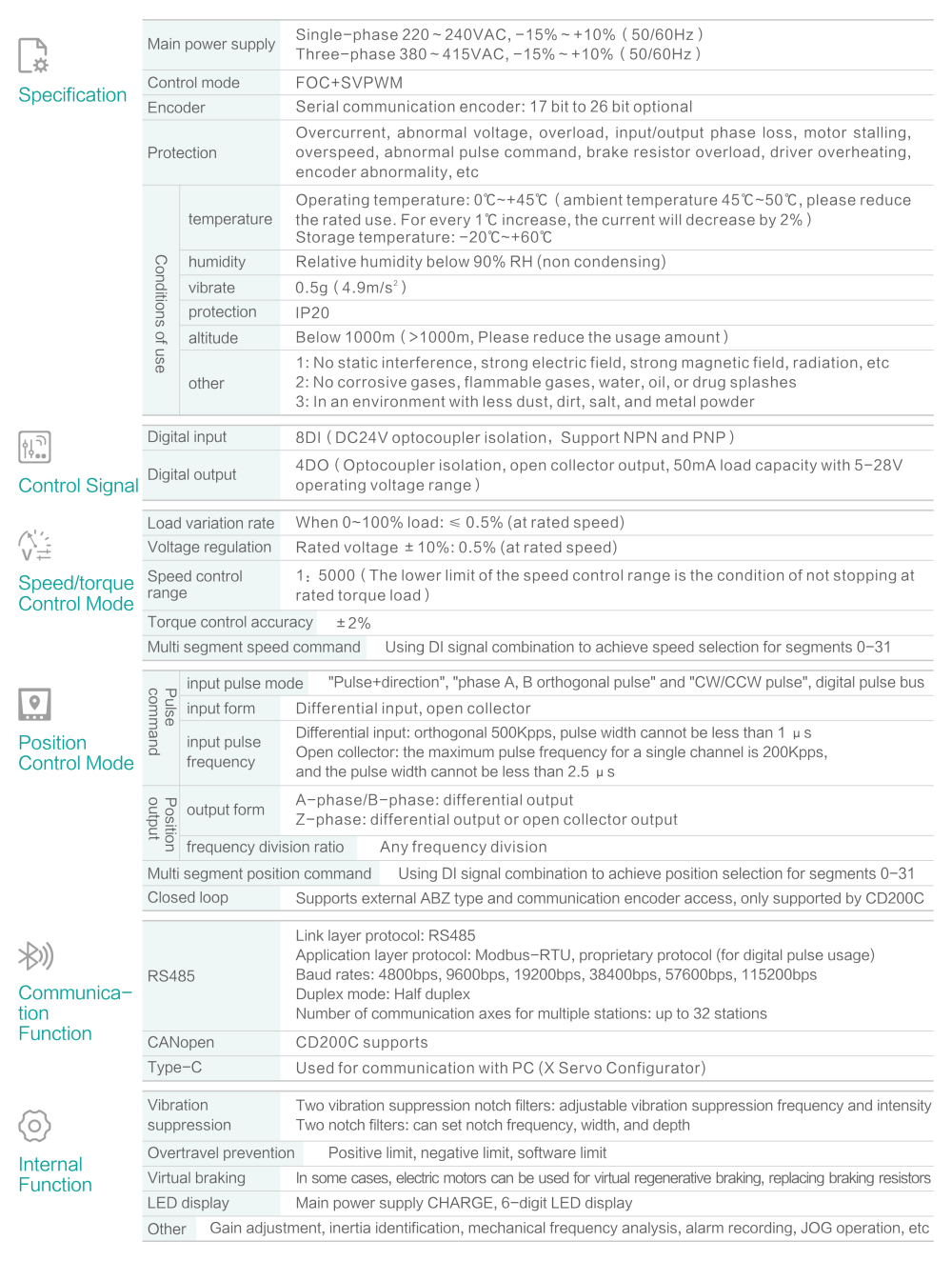
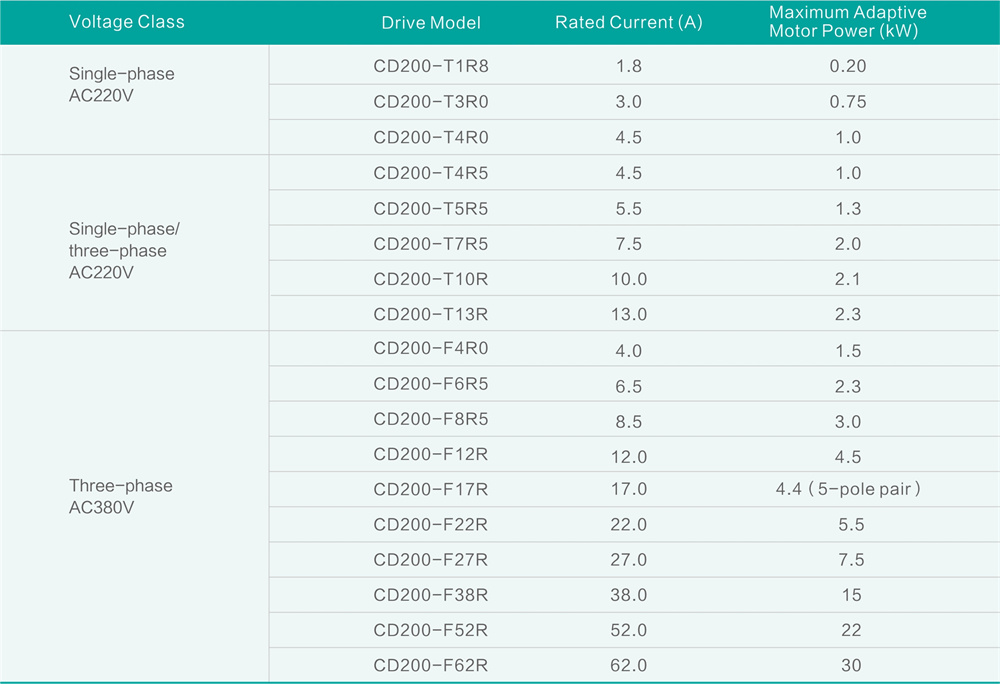
CD200 series Digital Pulse Servo Drive is a general-purpose high-performance AC servo driver developed by Simphoenix. It supports Modbus and CANopen communication protocols, by utilizing the corresponding communication interface and coordinating with the host controller, multi-axis servo networking operation can be achieved.The CD200 supports adaptive stiffness level setting, 1 second inertia auto-tuning, online load measurement, and vibration suppression for easy use. Combined with CM10 series high response servo motors, it runs reliably and smoothly, The drive aims to achieve quick and accurate position control, speed control, and torque control through high performance solutions for automation equipment in such industries as packaging, food production, CNC cutting, textiles, machine tools, woodworking carving, etc.
Industry Appalication:
❉ CNC ❉ industrial robot ❉ packaging machinery ❉ printing and textile
❉ automatic production line ❉ semiconductor ❉ new energy ❉ medical equipment
- Innovate digital pulse bus technology, with up to 5MHz high-frequency pulse input and intelligent antiinterference to ensure zero pulse loss, redefining industrial grade pulse transmission standards!
- The position control frequency can reach up to 16kHz, achieving higher dynamic response.
- Compatible with multiple resolution encoders, supporting up to 26 bit high-resolution encoders; Automatically read internal data of the motor and intelligently match the motor.
- Advanced operation compensation, resonance and end vibration suppression algorithms effectively shorten the setting time and ensure smooth, high-speed and high-precision positioning of equipment.
- Leading mechanical frequency characteristic scanning and control loop simulation function, assisting in the analysis of equipment mechanical performance.
- Multi-inertia identification technology accommodates diverse application needs for rapid positioning and smooth operation. With one-click adjustment, it effortlessly achieves inertia identification and parameter auto-tuning, significantly reducing commissioning complexity and shortening commissioning period.
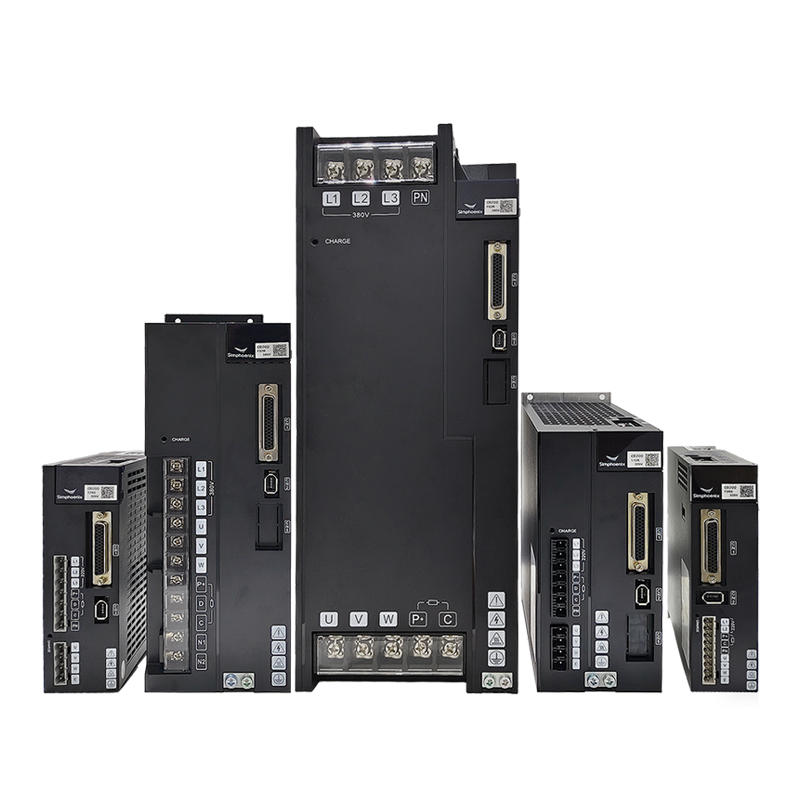
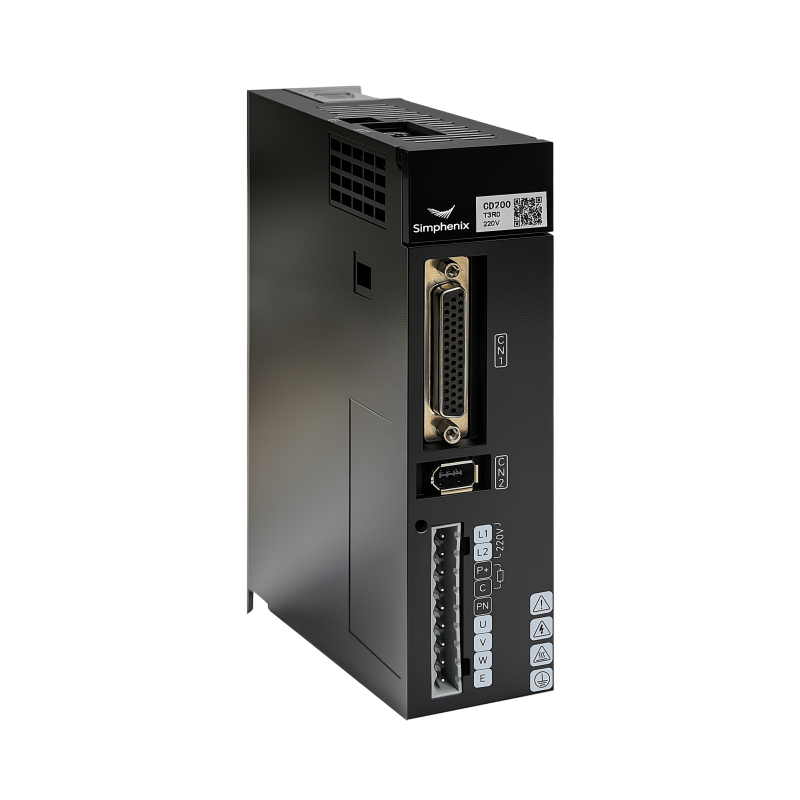
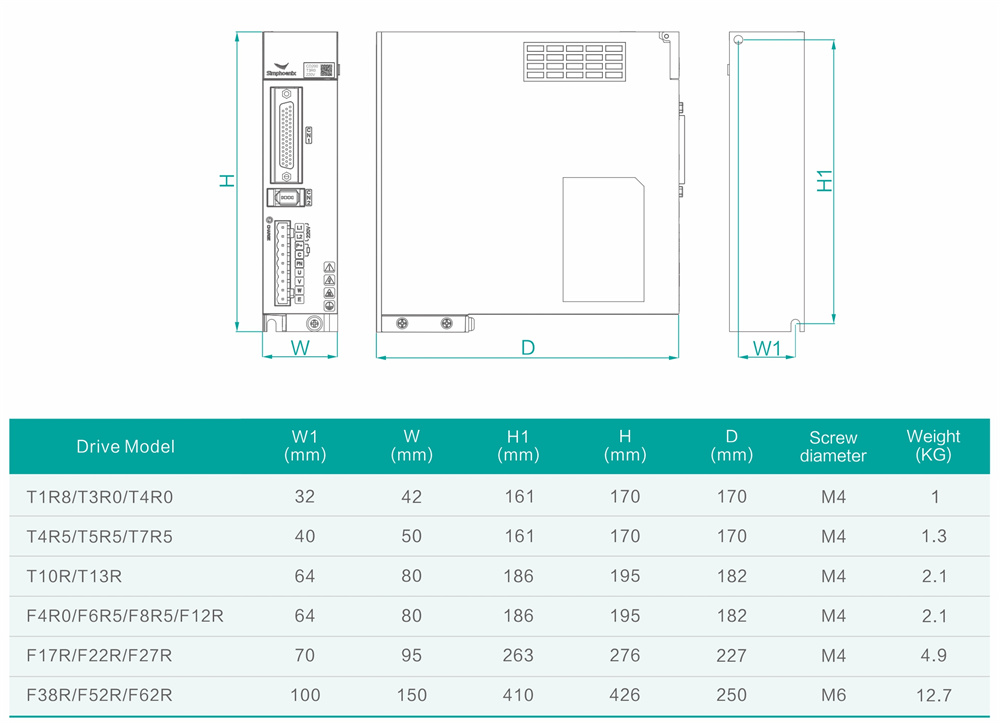
Product detail pictures:
Introduction to Variable Frequency Drives (VFDs)
Basic Motion Control – A Glossary of Terms Used With Variable Frequency Drives and Electric Motors
 By Dale from Wellington - 2016.04.18 16:45
This enterprise in the industry is strong and competitive, advancing with the times and develop sustainable, we are very pleased to have a opportunity to cooperate!
By Julia from Lithuania - 2015.08.12 12:27